


Atsaq Art and Cultural Relevance
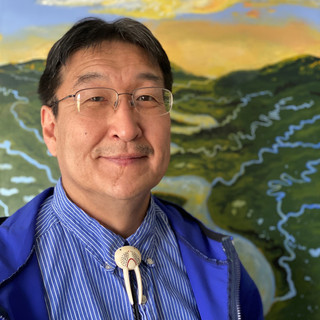
Some of my best pieces happen spontaneously, driven by bold colors and striking acrylic backgrounds. Through my work, I bring together modern materials and storytelling tied closely to the Yup'ik environment in Alaska.
Rooted in Yup'ik traditions, these pieces carry stories from the Alaskan tundra. Beyond visual appeal, they offer a living connection to a deep heritage. Here, I’ll share what sets Atsaq art apart, its cultural weight, and why sharing it is so meaningful.
Characteristics of Atsaq Art
Atsaq art stands out for its vivid colors and rich symbolic imagery. The work often draws from nature, wildlife, and the spiritual ties at the heart of Yup'ik life, using bold contrasts and dynamic shapes to give every piece a sense of motion and vitality.
Some key characteristics include:
Symmetry and balance: Deliberate harmony between shapes and colors anchors the composition.
Storytelling through imagery: Every design carries a story, memory, or legend.
Traditional motifs: Masks, animals such as ravens or salmon, and natural elements appear throughout the work.
Handcrafted quality: Shaping pieces by hand with a curved knife—canasuun (cha-na-soon)—keeps traditional techniques alive.
These features make Atsaq art instantly recognizable and deeply meaningful.

The Cultural Relevance of Atsaq Art
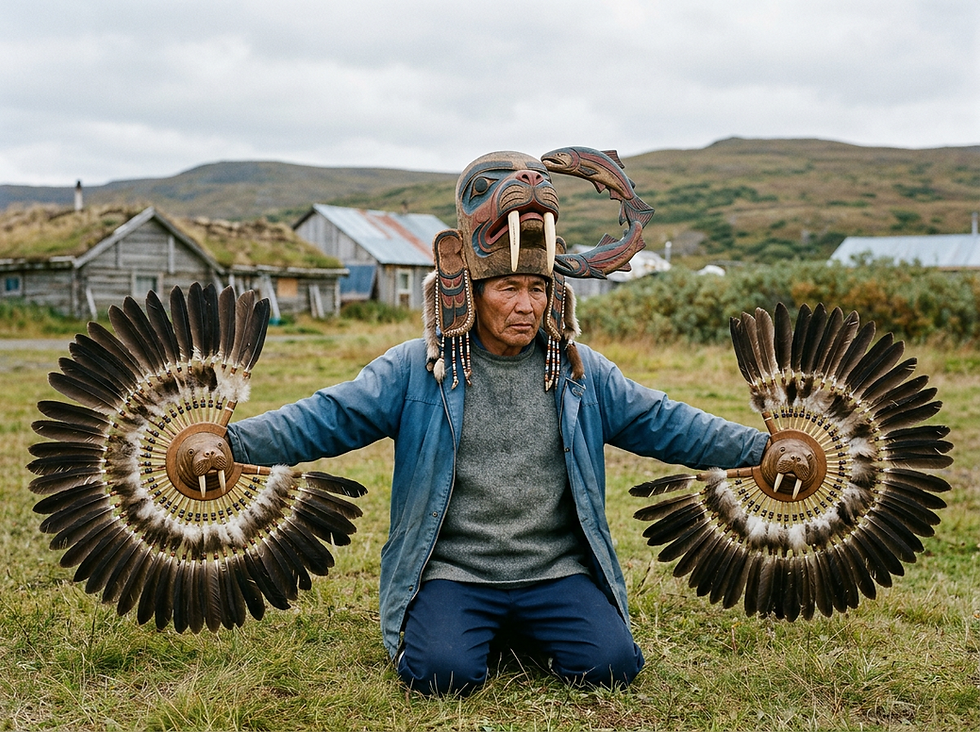
Through Atsaq art, I hope to inspire younger generations to connect with their heritage. Each piece weaves together childhood stories I grew up hearing and the natural world around us—carrying forward the spirit of traditional ceremonies where masks honored and thanked the creator, Ellam Yua, for providing what was needed to survive.
They Were Not Heathen
Between the 1800s and early 1900s, missionaries brought Christian beliefs that condemned Yup'ik mask-making and dance as "heathen masks" and "devil worship," leading to a ban. Those traditions were dismissed by outsiders unfamiliar with Agayuliyararput ("Our Way of Making Prayer"). Gatherings often united two or three villages to exchange gifts, strengthening a community built on sharing and love.
Rather than idols, masks served as a temporary expression of gratitude for the fish and wildlife provided by Ellam Yua. After being used for three or more days, they were "used as kindling for taking dry hot saunas in winter in a treeless tundra." As our late elder "Apasugaq" — Augustine Heavy, who new old songs, singer and leader of the drummers Tununak — put it, "There were no such thing as gods. That idea came from missionaries unfamiliar with our worldview."
Every figurine attached to a mask worked as a teaching symbol, guiding younger participants in their history and values tied to the land—and helping them know Ellam Yua through a relationship of love.
How Atsaq Art Inspires Modern Apparel and Design
The influence of Atsaq art extends beyond traditional crafts. Today, many artists and designers incorporate motifs into clothing and accessories. This fusion brings Native culture into everyday life, making it accessible and wearable through dropshipping without massive inventory by online shopping.
This approach aligns with the values of respect for nature and community found in Yup'ik culture. "Take only what you need" or in my case "subsistence economics?" I gave up my minivan, outboard moter, boat and chainsaw before moving to Bethel to access a greater audience and marketability in 2007. I preferred Bethel, as my nature is not used to the constant hussle and bussle in Anchorage. When I walk out the door, nature is not far out.
Atsaq Apparel New Fashion In Motion
Yup'ik Art Through Sustainable Practices and Partnerships
Sustainable dropshipping and on-demand production make it possible to share atsaq art without overproducing inventory. This setup lets Atsaq Art partner with Printful, Inc. in Charlotte, NC—our primary printer for apparel and accessories—as well as ArtsAdd in Long Island and Queens, NY, and PrintKK in Pomona, CA.
While our heart is always in reaching the most remote communities in Alaska and keeping select pieces competitive through inflation, fulfilling orders from outside the state opens doors nationwide. Designs made for modern Yup'ik style have reached customers in Florida, New York, Wisconsin, Texas, Nevada, California, Hawaii, and more, with Alaska still leading the way.
By pairing traditional craft with modern print-on-demand—subsistence economics in practice, taking only what I need—this work celebrates a living cultural legacy shaped by Native artists today.


Comments